Pasta Puttanesca: A Dish with a Story to Tell
Have you ever found yourself staring blankly into the fridge, hoping that some culinary spark will ignite and you’ll stumble upon a dinner revelation? As someone who has spent more than a few evenings in this predicament, I understand the struggle. Those moments when the clock is ticking, and your stomach growls in protest can make us feel defeated in the kitchen. Yet, amidst the chaos, there’s one dish that can quickly turn your cooking stress into a delightful dinner: Pasta Puttanesca. This dish, affectionately known as “Pasta of the Prostitute,” not only dazzles the palate but also tells an intriguing story that ties back to its origins.
The Kitchen Struggle: A Relatable Tale
A few months ago, I found myself in that all-too-familiar scene. It was a busy week filled with work deadlines and family commitments, and I had forgotten to meal prep for the week. My pantry was a jumble of mismatched ingredients, and I was on the verge of whipping up an uninspired peanut butter sandwich for dinner. No, thank you! I wanted something to spark joy and be satisfying. That’s when my eyes fell upon an open can of diced tomatoes and a jar of olives cascading down a shelf.
This “Pasta of the Prostitute” as it’s cheekily named, sprang to mind. One glorious whirlwind of flavors awaited, connecting my Italian roots to my current mood. With a delightful blend of ingredients that not only sing but dance together, it was guaranteed to deliver joy in under thirty minutes. This dish speaks to the heart, wrapping you in warmth even when time is short.
Let’s take a moment to appreciate the history behind Pasta Puttanesca.
The Meaning Behind the Name: A Flavorful Journey
Pasta Puttanesca gets its evocative name from the Italian word “puttana,” which translates to “prostitute.” The origins of the dish are steeped in folklore—some say it was created by sex workers in Naples who desired a quick, easy meal that could be thrown together in minutes between work, while others suggest that the dish gained popularity from its bold and alluring flavor.
Despite its name, the dish reflects a certain resilience and a zest for life, showing us that something quick and straightforward can still be outrageously delicious.
Quick Answer: The secret to perfect Pasta Puttanesca translates to “Pasta of the Prostitute” in English is the balance of salty anchovies, briny olives, and vibrant tomatoes that create an unforgettable taste.
Through this dish, we celebrate the power of simplicity. Life can get complicated, but a plate of Pasta Puttanesca serves as a gentle reminder that sometimes the simplest ingredients can lead to the most delightful meals.
Ingredients, Substitutions & Foolproof Steps
Here is what you will need to create Pasta Puttanesca:
- 12 ounces spaghetti — The classic choice; feel free to substitute with gluten-free or whole wheat pasta to cater to dietary preferences.
- 1/4 cup olive oil — Adds richness; for a lighter option, you could use avocado oil.
- 3 cloves garlic, minced — Brings depth; fresh garlic is ideal, but a garlic powder substitute can work in a pinch.
- 1/2 cup Kalamata olives, roughly chopped — Offers a salty punch; feel free to use green olives if preferred.
- 1/4 cup capers, drained — Adds a briny element; if you’re not a fan, leave them out entirely.
- 4 anchovy fillets, chopped — Provides an umami boost; canned tuna can be a lighter alternative.
- 1 teaspoon red pepper flakes — For a bit of heat; adjust according to your spice tolerance.
- 28 ounces diced tomatoes — The heart of the sauce; fresh tomatoes can be used for extra flavor during summer.
- 1 teaspoon sugar — Balances acidity; you can skip this if you prefer a more savory dish.
- Salt and pepper, to taste — Elevates flavor; always taste before serving!
- Fresh basil for garnish — A fragrant finishing touch; substitute with parsley if basil is unavailable.
Directions / Steps:
- Begin by bringing a large pot of salted water to a boil. This foundational step is crucial for the perfect pasta texture.
- Add in the spaghetti and cook according to package instructions until al dente. Reserve 1 cup of the pasta water, then drain the pasta.
- Heat the olive oil in a large skillet over medium heat.
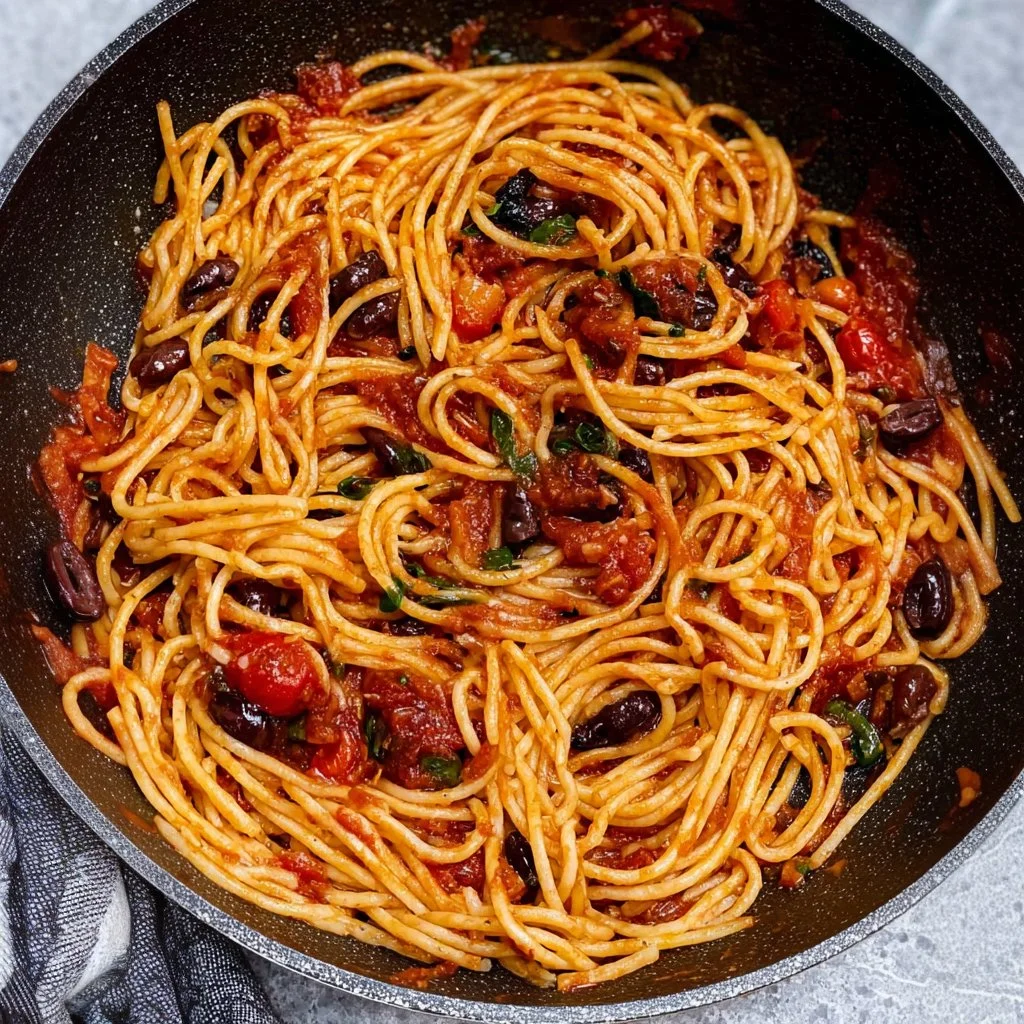
- Add the minced garlic, olives, capers, anchovies, and red pepper flakes to the skillet, stirring it up. Cook for about 30 seconds to 1 minute until fragrant.
- Next, add the diced tomatoes, sugar, salt, pepper, and about 1/4 cup of the reserved pasta water. Bring the mix to a boil, then reduce the heat and let it simmer for about 10 minutes.
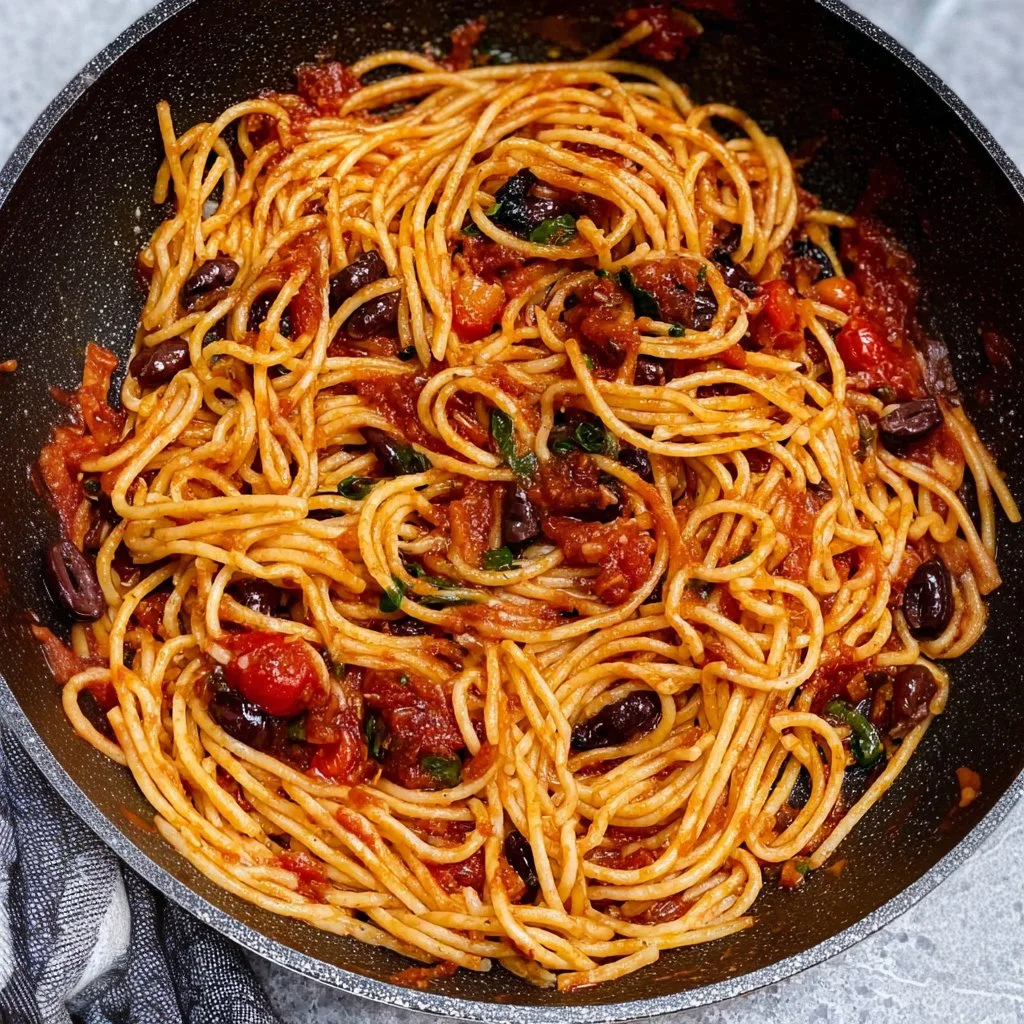
- Incorporate the drained pasta into the sauce, tossing all ingredients together. If the sauce seems too thick, add a bit more of the reserved pasta water to achieve your desired consistency.
- Serve immediately, garnished with fresh basil and grated Parmesan cheese, if desired.
Common Mistakes to Avoid
- Not salting the pasta water: It’s essential for the pasta to absorb flavor while cooking.
- Overcooking the spaghetti: Aim for al dente to keep it firm and satisfying.
- Forgetting the reserved pasta water: This is a golden key in adjusting your sauce to the right consistency.
Pro Tips
- Taste as you go! Adjust the flavors according to your personal preferences.
- If you prefer a fresher touch, allow the dish to sit for a minute off heat to let the flavors meld.
- This dish is even more flavorful when prepared a day in advance.
Serving, Storage & Freezer Tips
How to Serve Pasta Puttanesca
Serve your vibrant Pasta Puttanesca with a generous sprinkle of fresh basil and a shower of Parmesan cheese. A side of garlic bread or a crisp green salad pairs beautifully.
How to Store Pasta Puttanesca
Store leftovers in an airtight container in the refrigerator for up to three days. Reheat with a splash of water to regain its saucy texture.
Can You Freeze Pasta Puttanesca?
Yes, Pasta Puttanesca freezes well! Portion it into individual servings and store in freezer-safe containers for up to two months.
Reflection:
As I prepare this dish, I’m reminded of evenings spent with loved ones, immersed in discussions that linger over a plate of comforting spaghetti. Pasta Puttanesca holds a special place in my heart, paralleling life’s unexpected simplicity with stunning flavors.
FAQ SECTION
Can Pasta Puttanesca be vegetarian?
Absolutely! You can easily create a vegetarian version by omitting the anchovies and possibly adding an extra sprinkle of capers or olives to maintain that depth of flavor.
What can I pair with Pasta Puttanesca?
This dish pairs well with a simple arugula salad tossed in lemon vinaigrette to cut through the richness, or a glass of crisp white wine to refresh your palate.
How spicy is Pasta Puttanesca?
The level of spice is adjustable, depending on how much red pepper flakes you add. Feel free to start small and gradually increase if you prefer more heat.
Is Pasta Puttanesca gluten-free?
Yes, by using gluten-free pasta, you can enjoy all the deliciousness of Pasta Puttanesca without gluten.
Conclusion
Pasta Puttanesca translates to “Pasta of the Prostitute” in English—a dish that brings forth a chorus of flavors in a humble, heartfelt way. It captures life’s essence, showing us that while culinary masterpieces are beautiful, sometimes it’s the simple meals steeped in history that create meaningful connections. If this recipe reminds you of someone you love, share it with them. Your memories keep recipes alive.
Pasta Puttanesca
Ingredients
Method
- Bring a large pot of salted water to a boil.
- Add the spaghetti and cook according to package instructions until al dente. Reserve 1 cup of the pasta water, then drain the pasta.
- Heat the olive oil in a large skillet over medium heat.
- Add minced garlic, olives, capers, anchovies, and red pepper flakes. Stir and cook for about 30 seconds until fragrant.
- Add diced tomatoes, sugar, salt, pepper, and about 1/4 cup of reserved pasta water. Bring to a boil, then reduce heat and simmer for about 10 minutes.
- Incorporate the drained pasta into the sauce, tossing everything together. Add more pasta water if needed for desired consistency.
- Serve immediately, garnished with fresh basil and grated Parmesan cheese, if desired.