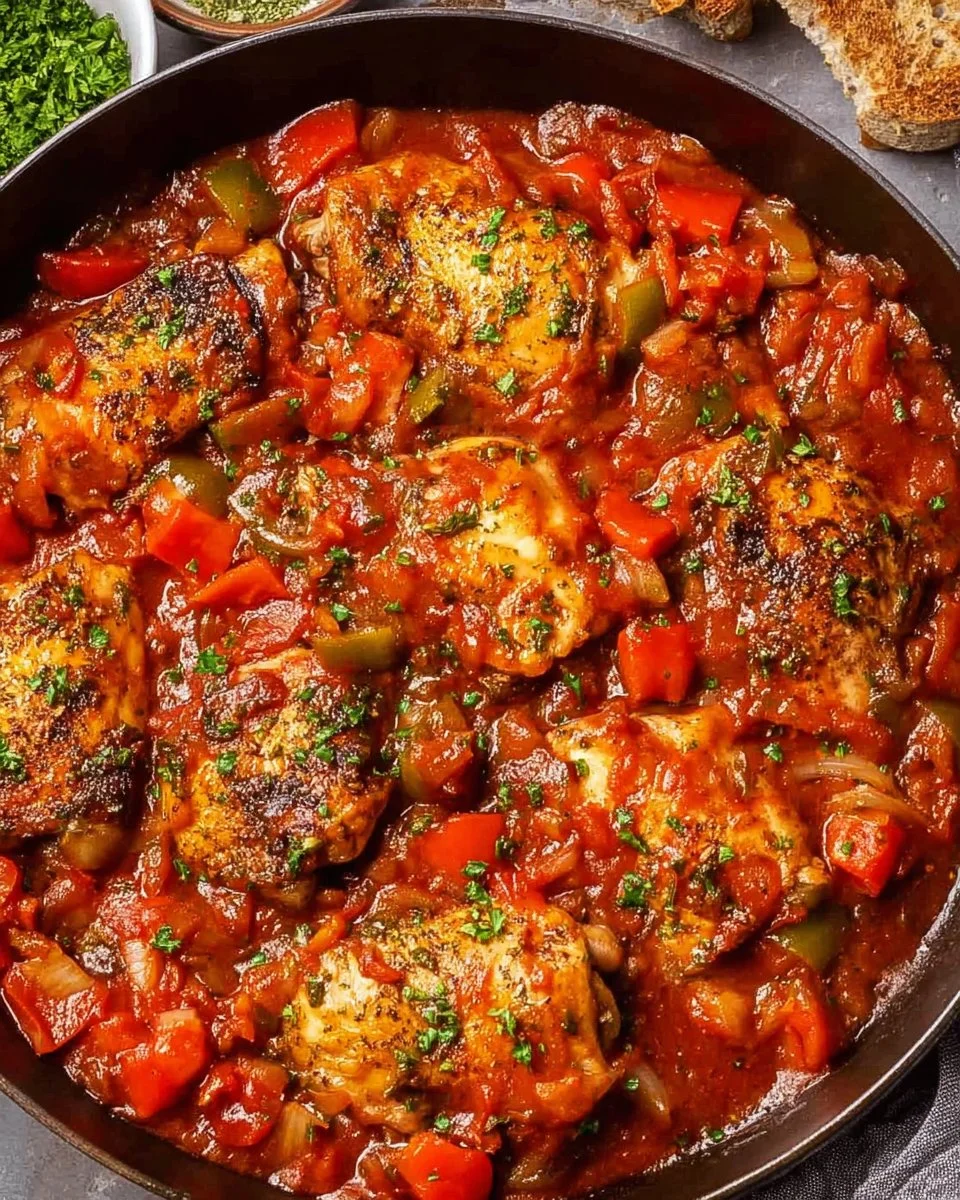
Chicken cacciatore translates to hunter’s chicken in English.
Imagine the warm aroma of a hearty Italian dish wafting through your kitchen, transporting you to a cozy trattoria on a bustling street in Rome. Chicken cacciatore is the epitome of comfort food—a rustic dish that combines tender, juicy chicken with vibrant vegetables and aromatic herbs, simmered to perfection in a flavorful tomato sauce. This delightful recipe brings together the essence of home-cooked meals, making it a favorite for family gatherings or a quiet dinner at home. The rich flavors meld beautifully, creating a dish that is both satisfying and easy to prepare. Whether you’re a seasoned cook or just beginning your culinary journey, this chicken cacciatore will impress everyone at the table, ensuring that every bite is filled with warmth and joy. Ready to fill your home with delightful scents and create lasting memories? Let’s start cooking!
Why You’ll Love This Recipe
This chicken cacciatore recipe is not just delicious; it offers a unique blend of flavors that you and your family will adore. The tender chicken thighs absorb the savory essence of the herbs, while the sautéed vegetables add a wonderful crunch and brightness to the dish. With its rich base of tomatoes, garlic, and balsamic vinegar, each spoonful is packed with comfort and richness, making it a go-to option for easy weeknight dinners or special occasions. This recipe is also incredibly versatile, allowing you to customize it with your favorite veggies or spices. Plus, it’s a high-protein meal that ensures everyone stays satisfied. When served over spaghetti, the dish transforms into a mouthwatering masterpiece that’s sure to impress. You’ll find yourself turning to this recipe time and time again, making it a staple in your collection of easy dinner ideas.
What Makes This Recipe Special
What sets this chicken cacciatore apart from other recipes is its authentic Italian preparation and robust flavor profile. The combination of herbs like thyme, oregano, and basil elevate the dish, creating an aromatic feast that delights the senses. The addition of balsamic vinegar introduces a slight tartness, balancing the sweetness of the tomatoes while enhancing the overall depth of flavor. This dish is not only comforting; it also offers a nostalgic experience of traditional Italian cooking. The use of boneless chicken thighs ensures that the meat remains juicy and tender, creating a perfect texture that pairs wonderfully with the hearty tomato sauce. Moreover, preparing this dish allows for creative freedom—feel free to play around with ingredients while staying true to its rustic charm. Ultimately, this recipe combines simplicity and elegance, making it an ideal choice for busy families seeking nutritious and wholesome meals.
Ingredients
boneless chicken thighs: The star of the dish, offering rich flavor and tenderness.
olive oil: Used for sautéing and adds depth of flavor.
Italian seasoning: A blend of herbs that enhances taste and aroma.
Kosher salt and pepper: Essential for seasoning and bringing out the flavors.
medium onion: Adds sweetness and a base of flavor to the sauce.
bell peppers: Provide freshness and vibrant color to the dish.
garlic: Infuses the sauce with robust flavor and aroma.
crushed red pepper flakes: Adds a hint of heat for flavor complexity.
balsamic vinegar: Introduces acidity and depth to the dish.
diced tomatoes with basil: Forms the base of the sauce with a hint of sweetness.
dried thyme: Offers earthy notes that complement the other herbs.
dried oregano: Provides a classic Italian flavor.
dried basil: Adds aromatic freshness to the sauce.
fresh basil or parsley: Optional garnish for color and flavor enhancement.
How to Make Chicken cacciatore translates to "hunter’s chicken" in English.
STEP 1. Season the chicken. Sprinkle the chicken thighs with Italian seasoning, salt, and pepper on both sides.
STEP 2. Heat the oil. Warm a skillet over medium-high heat and add olive oil.
STEP 3. Cook the chicken. Sear the chicken thighs until golden brown on both sides, then set aside.
STEP 4. Sauté the vegetables. In the same skillet, add the remaining olive oil, onion, and bell peppers, cooking for 3-4 minutes until tender.
STEP 5. Add garlic and pepper flakes. Stir in minced garlic and crushed red pepper flakes; cook for an additional minute until fragrant.
STEP 6. Deglaze the pan. Pour in balsamic vinegar and a splash of water, scraping the bottom of the pan to release brown bits.
STEP 7. Add tomatoes and herbs. Incorporate diced tomatoes, thyme, oregano, and basil; bring to a boil, then reduce heat.
STEP 8. Simmer the chicken. Return seared chicken to the skillet and simmer for 15-20 minutes until fully cooked through, reaching a safe internal temperature of 165°F (74°C).
STEP 9. Garnish and serve. Top with fresh basil or parsley and serve warm over cooked spaghetti if desired.
Pro Tips
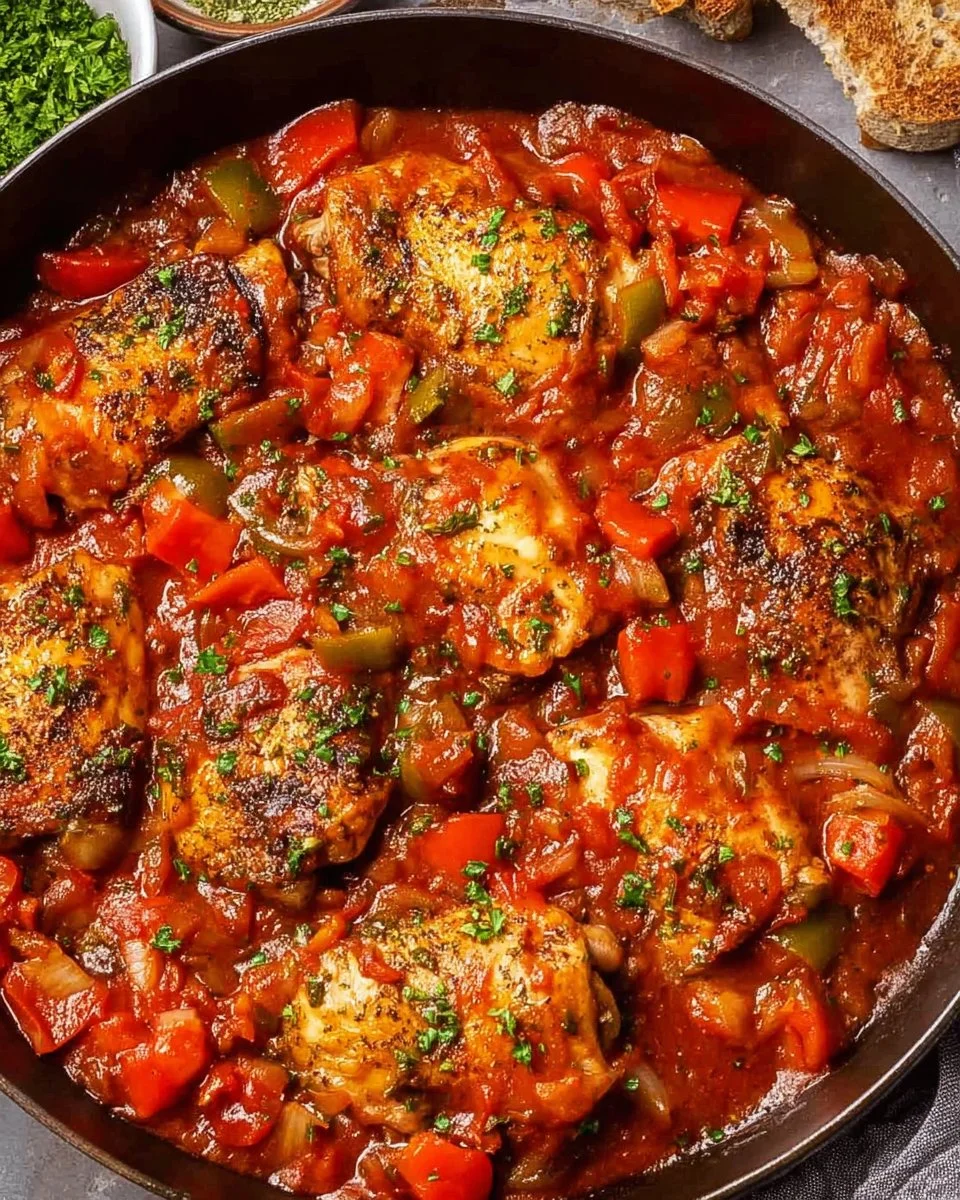
To ensure the best results when making chicken cacciatore, consider these pro tips. Start with quality chicken thighs, as they provide the juiciness and flavor that make this dish exceptional. When searing the chicken, ensure the skillet is hot enough—this creates a nice crust and enhances the overall taste. Don’t rush the sautéing of the vegetables; allowing them to soften and caramelize contributes to a deeper flavor profile. If you prefer a thicker sauce, let the cacciatore simmer a bit longer for additional reduction. Feel free to adjust the spice levels; adding more crushed red pepper can increase the heat, while adding more tomatoes can create a milder flavor. Lastly, fresh herbs added at the end of cooking will enhance the aroma and presentation, making the dish even more appealing. Enjoy the process, and remember that cooking is as much about having fun as it is about the final product.
Common Mistakes to Avoid
When preparing chicken cacciatore, here are common pitfalls to steer clear of. First, don’t rush the searing process; ensure your skillet is adequately heated for a perfect golden-brown crust. Avoid overcrowding the pan; if necessary, cook the chicken in batches to achieve the best results. Using too much salt initially can overpower the flavors, so season gradually and adjust as you go. When adding vegetables, overcooking them can lead to mushiness; aim for a tender yet crisp texture. If the sauce is too watery, allow it to simmer uncovered to thicken. Be mindful of cooking times as well; always check the internal temperature of the chicken to ensure it reaches the safe 165°F (74°C). Finally, don’t forget to taste as you cook; this will help you make adjustments and enhance the overall flavor profile of your dish.
Variations
• Swap chicken thighs for breasts for a leaner option.
• Add mushrooms for an earthy flavor.
• Include olives for a Mediterranean twist.
• Use zucchini or eggplant for a veggie-packed version.
• Substitute balsamic vinegar with red wine for a different depth of flavor.
• Incorporate different herbs like rosemary for a twist.
Serving Ideas
Serve chicken cacciatore over a bed of fluffy cooked spaghetti for a classic Italian meal. It pairs beautifully with a side of garlic bread, perfect for soaking up the extra sauce. For a lighter option, serve with a fresh arugula salad drizzled with a simple vinaigrette that balances the dish’s richness. Additionally, a side of steamed green beans or roasted broccoli adds vibrant color and nutrition to your plate. For those who love comfort food, a creamy polenta can serve as a delicious base, enhancing the overall richness of the meal. Explore different sides, and create a spread that complements the flavors of this delightful dish.
Meal Prep & Storage
Chicken cacciatore is perfect for meal prep and storing. To prepare ahead, follow the recipe, allowing the dish to cool completely before transferring it to an airtight container. It can be stored in the refrigerator for up to three days, making it an ideal choice for busy weeknights. When reheating, gently warm on the stovetop or in the microwave, adding a splash of water or broth if needed to prevent drying out. This dish also freezes beautifully; place in a freezer-safe container for up to three months. Thaw overnight in the refrigerator before reheating. Consider portioning it out for lunches or quick dinners, creating stress-free meals that maintain their delicious flavors.

FAQs
Can I use chicken breasts instead of thighs?
Yes, while chicken thighs are juicier and more flavorful, chicken breasts can be used for a leaner option. Adjust cooking time accordingly to avoid dryness.
What can I serve with chicken cacciatore?
It pairs wonderfully with spaghetti, garlic bread, or a fresh salad. Creamy polenta or a side of roasted vegetables also make excellent accompaniments.
Can I make this dish in advance?
Absolutely! Chicken cacciatore tastes even better the next day as the flavors meld together. Store it in the refrigerator for up to three days or freeze it for later enjoyment.
Is chicken cacciatore spicy?
The level of heat depends on the amount of crushed red pepper flakes you add. Adjust to your taste preference for a milder or spicier dish.
Can I add other vegetables?
Yes! Feel free to customize with your favorite vegetables like mushrooms, zucchini, or olives to enhance the flavor and texture.
How can I thicken the sauce?
If you prefer a thicker sauce, let it simmer uncovered for a longer time or mix a slurry of cornstarch with water, stirring it into the sauce while it simmers.
Conclusion
This chicken cacciatore recipe is a perfect blend of flavors, simplicity, and comfort, making it a must-try for any home cook. It’s not just a meal; it’s an experience that brings warmth to your table. Embrace the joy of cooking and savor the delightful aroma as it fills your kitchen. Whether shared with loved ones or enjoyed solo, this dish is sure to become a cherished favorite in your household. Happy cooking!
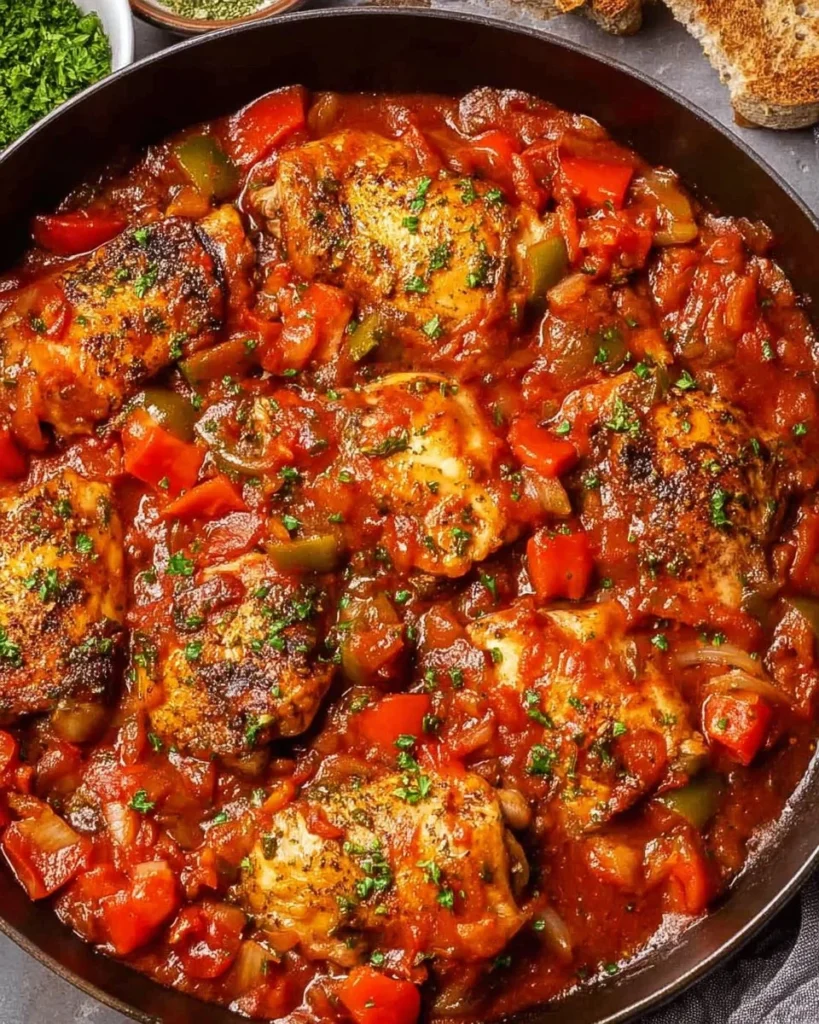
Chicken Cacciatore
Ingredients
Method
- Sprinkle the chicken thighs with Italian seasoning, salt, and pepper on both sides.
- Warm a skillet over medium-high heat and add olive oil.
- Sear the chicken thighs until golden brown on both sides, then set aside.
- In the same skillet, add the remaining olive oil, onion, and bell peppers, cooking for 3-4 minutes until tender.
- Stir in minced garlic and crushed red pepper flakes; cook for an additional minute until fragrant.
- Pour in balsamic vinegar and a splash of water, scraping the bottom of the pan to release brown bits.
- Incorporate diced tomatoes, thyme, oregano, and basil; bring to a boil, then reduce heat.
- Return seared chicken to the skillet and simmer for 15-20 minutes until fully cooked through, reaching a safe internal temperature of 165°F (74°C).
- Top with fresh basil or parsley and serve warm over cooked spaghetti if desired.