
Are you tired of store-bought curry pastes that lack that authentic depth of flavor? Have you ever tasted a dish that brought you back to a cozy kitchen, filled with aromatic spices bubbling away? If so, you’ve come to the right place! Today, we’re diving into how to make your very own Homemade Green Curry Paste. This vibrant paste not only enhances your dishes with incredible flavor, but it can also evoke memories of warm family dinners and cultural traditions. In this article, we’ll explore the ins and outs of crafting a truly unique and personalized green curry paste that will elevate your cooking.
Rediscovering the Joy of Cooking
Cooking can sometimes feel like a daunting task, especially when juggling a busy life. I remember the first time I attempted to make Thai green curry from scratch. It was a typical Saturday night, the kind where you want something comforting and satisfying. Yet, as I reached for a jar of store-bought curry paste, I felt unsatisfied—where was the spark of creativity I used to find in the kitchen?
Fast forward to today, where I have embraced DIY cooking like never before. I found my way back to the kitchen y experimenting with homemade green curry paste. Crafting it from scratch not only infused my dishes with a beautiful, complex flavor but also rekindled a love for cooking I thought I had lost.
A little backstory: When we gather around the dinner table, it’s not merely about the food; it’s about connection. Preparation becomes a process to connect with loved ones, transforming simple ingredients into a feast. My Homemade Green Curry Paste is now a staple in my kitchen and a cherished recipe I pass on, blending tradition with modern twists.
Finding joy in cooking takes patience, persistence, and practice, but I promise you’ll reap the delicious rewards.
Why Homemade Green Curry Paste Rocks
Homemade green curry paste works wonders because it allows you to control the balance of flavors, spice levels, and freshness of ingredients. Think of it as your own personal signature! The vibrant blend of herbs and spices creates a paste that can invigorate your dishes in ways that readymade options simply cannot.
Quick Answer: The secret to perfect Homemade Green Curry Paste is using fresh herbs like basil and cilantro, coupled with spices that you can adjust to your liking.
Not only does making your green curry paste guarantee quality, but it also opens doors to experimenting with flavor combinations. By cooking it in oil, you enhance the aromatic elements while infusing your dishes with rich, warm tones. I often add it to various creations—like Peanut Butter Chicken or even a simple stir-fry—to bring an exciting twist to familiar favorites.
Plus, making a batch at home offers freshness that’s impossible to find in a store. With its vibrant color and rich flavor, you’ll have your family and friends wondering where you learned to create such magic in the kitchen!
Ingredients, Substitutions & Foolproof Steps
Finding the right ingredients for your Homemade Green Curry Paste is key to unlocking incredible flavor. Here’s a clean, narrative list of what you’ll need, along with some handy substitutions:
- 1 teaspoon coriander seeds — Provides a warm, citrusy flavor; you can use ground coriander if needed.
- 5 black peppercorns — Adds a slight heat; substitute with white pepper for a milder kick.
- 1 jalapeno (or more for extra spicy) — For that spicy edge; use poblano for less heat.
- 1 Anaheim pepper, seeds removed and roughly chopped — Offers a sweet flavor profile; a bell pepper works in a pinch.
- 4 cloves garlic, peeled and lightly crushed — Brings depth; garlic powder can work in a hurry.
- 1 thumb-sized piece of fresh ginger, peeled and chopped — Essential for warmth; ground ginger can be used but isn’t as vibrant.
- 4 green onions, roughly chopped — Adds freshness; shallots can substitute for a sweeter note.
- 4 teaspoons lemongrass paste — Infuses a refreshing citrus flavor; fresh lemongrass is fantastic if you have it.
- 1 tablespoon brown sugar — A hint of sweetness balances flavor; coconut sugar is a great alternative.
- 1 lime, zested and juiced — Essential for brightness; lemon zest and juice can be used for a twist.
- 2 teaspoons fish sauce — Adds umami depth; soy sauce is a good non-fish substitute.
- 1/4 cup packed mint leaves — Provides a refreshing lift; basil can work instead, but it will change the flavor.
- 1/2 cup packed basil leaves, preferably Thai basil — Essential for authenticity; regular basil works too.
- 1/2 cup cilantro stems — These add a lovely flavor; if you dislike cilantro, consider a little parsley.
- 1/2 teaspoon toasted sesame oil — Offers a nutty aroma; omit if you’re looking for a lighter version.
- 1/2 teaspoon fine sea salt — Always necessary; adjust to taste.
Directions / Steps:
- In a mortar and pestle, grind the coriander seeds and peppercorns. Transfer this mixture to a food processor.
- For a spicy paste, cut the jalapeno in half and add to the processor; for a milder option, remove seeds and white membrane.
- Add the Anaheim pepper, garlic, ginger, green onions, lemongrass paste, brown sugar, and lime zest to the food processor with the ground spices and jalapeno. Pulse until a rough paste forms.
- Add the fish sauce, mint leaves, basil leaves, cilantro stems, sesame oil, salt, and lime juice. Continue pulsing until smooth.
- For usage: Use 4-6 tablespoons of paste for one can of coconut milk, cooking it in oil to enhance flavor.
- Store in a glass jar with a layer of avocado oil for up to a week in the fridge or freeze for up to three months.
Common Mistakes to Avoid:
- Not grinding spices finely enough can leave the paste gritty.
- Forgetting to adjust spice levels to your preference can make or break the flavor.
- Skipping fresh herbs leads to a paste lacking authenticity.
Pro Tips:
- If you want a more aromatic paste, try adding a little more paste to your dish as it cooks.
- Using fresh ingredients rather than bottled ones can significantly enhance flavor.
- Play around with your recipe by adding or reducing spices based on you and your family’s taste.
Nutrition Highlights Table:
NutrientPer Serving Protein7g Carbs12g Fat6g There you have it! Your performance in the kitchen will show once you have this Homemade Green Curry Paste at your disposal. You’ll amaze friends and family with your culinary skills, and you might want to keep this recipe close at hand.
Serving, Storage & Freezer Tips
How to Serve Homemade Green Curry Paste
Use your Homemade Green Curry Paste to add a whirlwind of flavor to simple dishes. I love using it in coconut milk-based soups, curries, or stir-fried chicken. Pair it with rice, and don’t forget to garnish with fresh herbs for an appealing presentation.
How to Store Homemade Green Curry Paste
You can store your homemade green curry paste in an airtight container in the fridge for about a week. Just remember to top it off with a layer of oil to maintain freshness.
Can You Freeze Homemade Green Curry Paste?
Absolutely! Portion your paste into ice cube trays; once frozen, transfer cubes to a zip-top bag for easy use. They’ll last for about three months.
Holding onto these memories and traditions is vital for keeping cooking alive. These moments in the kitchen are not just about food; they represent love, craftsmanship, and creativity.
FAQ SECTION
What can I substitute for fish sauce in green curry paste?
If you’re avoiding fish sauce, a soy sauce or coconut aminos can serve as a flavorful alternative. While the taste will vary slightly, it still maintains a delicious umami essence.
How long does homemade green curry paste last?
Your Homemade Green Curry Paste can last up to a week in the fridge. For longer storage, consider freezing it in a silicone ice cube tray for added convenience.
Can I use dried herbs instead of fresh?
While fresh herbs are ideal for optimal flavor, dried herbs can work in a pinch, keeping in mind that dried herbs are more concentrated; you’ll need less.
How spicy is this green curry paste?
The spice level can depend heavily on the number of jalapeno peppers you choose to use. For a milder taste, remove the seeds and white membranes.
Conclusion
Cooking is a personal journey that connects us to our roots and loved ones. Making your Homemade Green Curry Paste allows you not just to impress with exquisite flavors but also to share comforting memories rooted deep in tradition.
“If this recipe reminds you of someone you love, share it with them. Your memories keep recipes alive.”
YOU MAY ALSO LIKE:
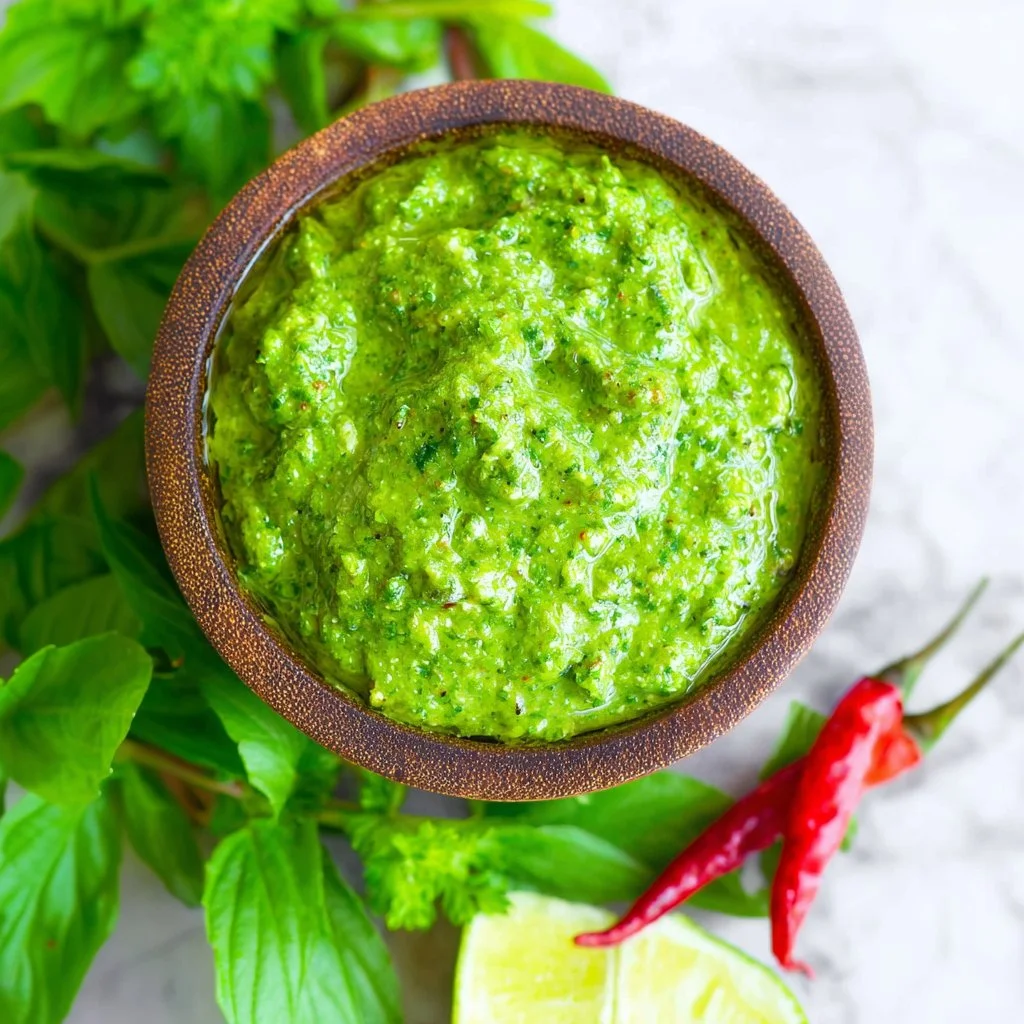
Homemade Green Curry Paste
Ingredients
Method
- In a mortar and pestle, grind the coriander seeds and peppercorns. Transfer this mixture to a food processor.
- For a spicy paste, cut the jalapeno in half and add to the processor; for a milder option, remove seeds and white membrane.
- Add the Anaheim pepper, garlic, ginger, green onions, lemongrass paste, brown sugar, and lime zest to the food processor with the ground spices and jalapeno. Pulse until a rough paste forms.
- Add the fish sauce, mint leaves, basil leaves, cilantro stems, sesame oil, salt, and lime juice. Continue pulsing until smooth.
- Use 4-6 tablespoons of paste for one can of coconut milk, cooking it in oil to enhance flavor.
- Store in a glass jar with a layer of avocado oil for up to a week in the fridge or freeze for up to three months.