
Have you ever found yourself peeling oranges, only to toss those beautiful, fragrant peels into the trash? It’s a small frustration that many home cooks face—wasting such vibrant and aromatic goodness. Well, today, we celebrate the often-forgotten orange peel by transforming it into something extraordinary: Candied Orange Peel in Syrup. Imagine those zesty flavors captured in a syrup that can elevate desserts, cocktails, and breakfast dishes alike! Join me as I guide you through this delightful recipe that not only minimizes waste but also creates wonderful culinary memories.
Embracing the Citrus: A Kitchen Frustration
Let me take you back to a vibrant summer afternoon in my kitchen. The sun streamed through the window, casting a warm glow as I peeled a fresh orange—little did I know, those peels held the secret to culinary joy. With each slice of the orange, I was reminded of my grandmother’s whimsical kitchen. She was a master at swooping up every leftover bit, turning waste into treasure.
But how could I recreate that magic? The frustration of throwing away the peels nagged at me, demanding a change. Why not candy them? This simple pivot not only gave life to what would have been discarded but also added a touch of elegance to my dish!
This moment inspired me to perfect a method for making Candied Orange Peel in Syrup. Not only does this recipe embody the spirit of resourcefulness, but it also awakens fond memories of family gatherings centered around good food. As a result, I found crafting this sweet treat to be therapeutic.
Remember, the key is to score those oranges correctly and treat them with care. Your efforts will be rewarded, allowing you to give those peels the respect they deserve. If you’re curious about how to elevate your cooking with smart ingredient choices, check out my guide on breakfast sides for busy mornings.
The Art and Science of Candied Orange Peel
You might be wondering, what makes Candied Orange Peel in Syrup truly shine? The secret lies in the process. We combine sugar, water, and orange peels to create a syrup that not only preserves but enhances. The transformation from bitter to sweet blooms beautifully, allowing the flavors to flourish.
Quick Answer: The secret to perfect Candied Orange Peel in Syrup is the simmer technique that allows the flavors to fully meld into sweet harmony.
The combination of citric acid and optional orange blossom water adds depth to the syrup, boosting the citrus essence. For those bustling moments when you need an impressively quick fix, this Candied Orange Peel can be a delightful addition to your dishes. Plus, it’s an impressive garnish for cocktails, elevating your drink just like the recipe in Sweet and Sour Mix: The Ultimate Guide to Cocktails.
How It Works:
- Citrus Magic: Every slice of orange peel retains potent oils that offer a punch of flavor, brightening up dishes and drinks alike.
- Preservation Love: You delight in homemade treats while keeping waste at bay. Each jar signifies a little victory over kitchen waste!
- Culinary Creativity: These candied peels become your secret weapon for desserts, charcuterie boards, and gift-worthy treats.
Discover the transformative magic behind Candied Orange Peel in Syrup, and marvel at how something so humble becomes an unexpected delight.
Ingredients and Foolproof Steps
Creating Candied Orange Peel in Syrup is straightforward, and the ingredients are just as simple:
- 2 cups thinly sliced orange peel — the star of the show! Choose organic oranges for zestier flavor.
- 2 ½ cups sugar — brings sweetness; you can substitute with coconut sugar for a different flavor.
- 2 cups water — to create the syrup base; filtered water ensures purity.
- 2 tablespoons light honey or corn syrup — adds richness; choose honey for a floral note.
- ¼ teaspoon citric acid — balances sweetness; lemon juice can serve as a substitute.
- ½ teaspoon orange blossom water (optional) — infuses a delicate floral aroma; feel free to skip if you like.
Directions / Steps:
- Score the oranges and peel the strips carefully, ensuring they are about ¼ inch thick.
- Optional: Soak the peels overnight in water to reduce bitterness or pre-boil them.
- Prepare a canning pot with water to sterilize jars.
- In a saucepan, combine sugar, water, and honey over medium heat until sugar dissolves.
- Add orange peels to the syrup and simmer, stirring minimally.
- When syrup reaches 230ºF, dissolve citric acid in a bit of water and add, along with orange blossom water if using.
- Use a slotted spoon to place candied peels in jars, cover with syrup, and leave ¼ inch headspace.
- Process jars in boiling water bath for 10 minutes.
- Let jars cool at room temperature for 24 hours before storing.

Common Mistakes to Avoid:
- Don’t skip boiling or soaking the peels, or you might end up with bitterness.
- Ensure proper headspace in jars to prevent spoilage.
Pro Tips:
- Use a candy thermometer for accuracy.
- Craving diversity? Use lemon or lime peels for a refreshing twist!
Nutrition Highlights Table:
NutrientPer Serving Protein7g Carbs12g Fat6g Sweeten your creations with these delightful tips and ensure you harness the full flavor potential of your Candied Orange Peel in Syrup! Explore more about preparing scrumptious meals with my guide on baked chicken recipes.
Serving, Storage & Freezer Tips
How to Serve Candied Orange Peel in Syrup
Serve your Candied Orange Peel in Syrup draped over vanilla ice cream, folded into pancakes, or incorporated into savory dishes as an unexpected delicacy. The vibrant color and sweet citrus aroma will surely delight your guests, bringing them back to that sunny day in your kitchen.
How to Store Candied Orange Peel in Syrup
Store your candied orange peel in an airtight jar, submerged in syrup. Keep it in the refrigerator, where it can last up to a month. Always use a clean utensil to avoid contamination!
Can You Freeze Candied Orange Peel in Syrup?
Absolutely! For longer storage, place jars in the freezer, and make sure to leave some headspace as they expand. They will stay fresh for up to a year, keeping those summer memories alive during chilly months.
Reflecting back, I love how this recipe not only enhances meals but also breathes life into the way we see food. Each jar is a reminder of sustainability combined with sweet creativity.
FAQ SECTION
Can I use other citrus peels? Definitely! Feel free to experiment with lemon, lime, or even grapefruit peels for unique flavor combinations.
How do I know if my candied peel is done? When your syrup reaches 230ºF, it’s ready! Your peels should appear translucent and have a glossy finish.
What are other uses for candied peels? You can use them as cocktail garnishes, in baking cakes, or even as an impromptu dessert topping. The possibilities are endless!
Can I skip the canning process? Yes! You can store them in the refrigerator without canning, but they will have a shorter shelf-life.
Conclusion
Experience the joy of cooking while you create Candied Orange Peel in Syrup, a delightful way to elevate your culinary repertoire. This recipe transforms scraps into a golden treasure. If this recipe reminds you of someone you love, share it with them. Your memories keep recipes alive.
YOU MAY ALSO LIKE:
- Turkey Ribs Made Easy: Flavor, Fun & Health Combined
- Peanut Butter Chicken Recipe: The Ultimate Comfort Food Dish
- Homemade Alfredo Sauce Recipe: A Creamy Classic
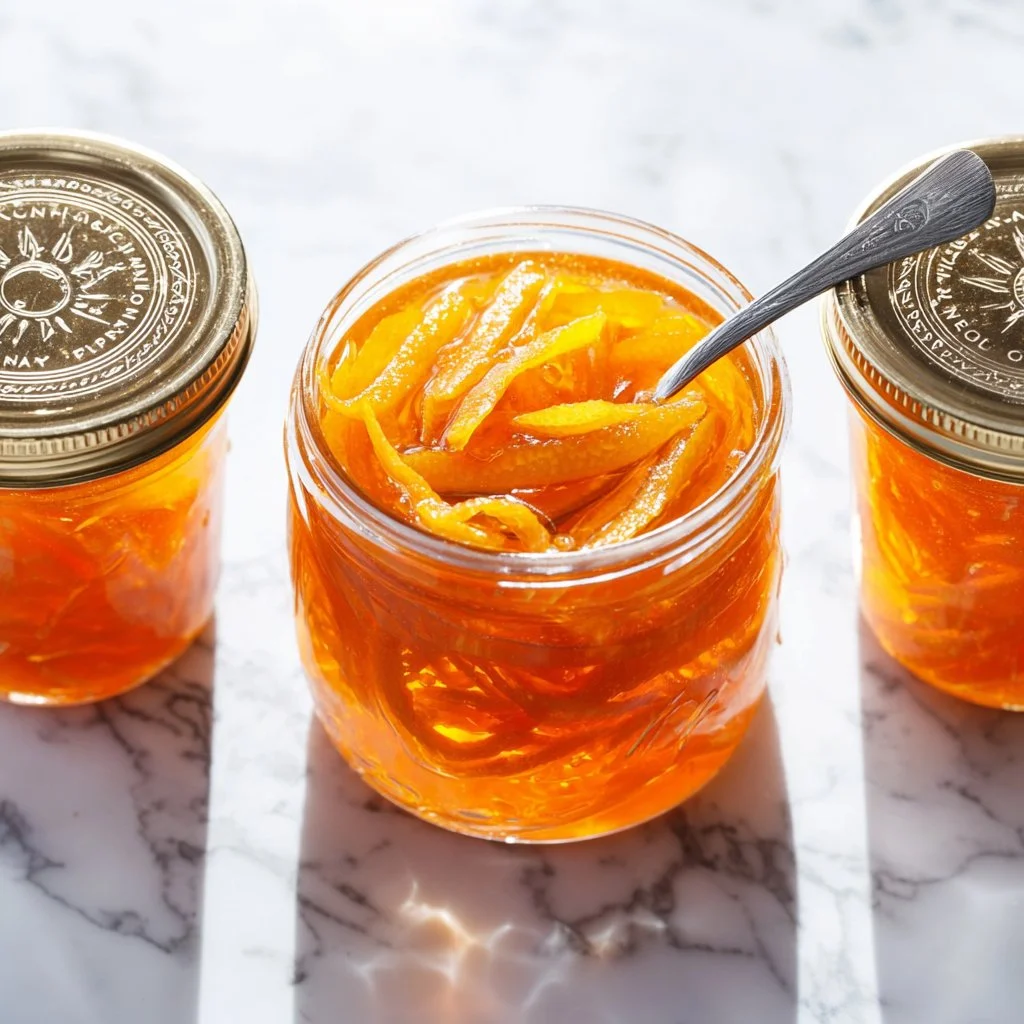
Candied Orange Peel in Syrup
Ingredients
Method
- Score the oranges and peel the strips carefully, ensuring they are about ¼ inch thick.
- Optional: Soak the peels overnight in water to reduce bitterness or pre-boil them.
- Prepare a canning pot with water to sterilize jars.
- In a saucepan, combine sugar, water, and honey over medium heat until sugar dissolves.
- Add orange peels to the syrup and simmer, stirring minimally.
- When syrup reaches 230ºF, dissolve citric acid in a bit of water and add, along with orange blossom water if using.
- Use a slotted spoon to place candied peels in jars, cover with syrup, and leave ¼ inch headspace.
- Process jars in boiling water bath for 10 minutes.
- Let jars cool at room temperature for 24 hours before storing.