
Sometimes, the hustle and bustle of daily life leaves us longing for a meal that not only satisfies our hunger but also nurtures our souls. The comforting qualities of tender vegetables paired with hearty chickpeas can become a beacon of warmth on those busy weekdays. That’s where the Turkish Vegetable Casserole with Chickpeas comes into play. This colorful dish not only bursts with rich flavors but also fills your kitchen with an inviting aroma that wraps around you like a cozy blanket.
The Kitchen Dilemma: Why Simple Doesn’t Always Mean Quick
Let’s face it; most of us experience the kitchen blues at one point or another—overwhelmed by the choices we have to make. A few years back, I found myself in a similar bind, standing in front of my refrigerator with a head full of ingredients but no idea where to start. One evening, I rifled through my pantry, desperately trying to create something delicious and wholesome. After hours of scouring old cookbooks and scrolling through my favorite food blogs, I stumbled upon a gorgeous recipe for a vegetable casserole.
I learned that, while throwing together veggies is simple in theory, it can be daunting in practice. Creating a satisfying blend requires the right mix of flavors, textures, and just the right amount of love. The Turkish Vegetable Casserole with Chickpeas perfectly showcases how easy it can be to turn simple ingredients into something extraordinary. That’s why it’s become a staple in my home, reminding me of those nights spent experimenting in the kitchen. By using your hands to toss and season, you connect not just with the food but also with the moment itself.
Trust Tip: Cooking shouldn’t be a race against time. Take a breath, engage with each ingredient, and let the process unfold.
For some fun breakfast ideas that can also get your day off to a great start after your delicious casserole, check out our Breakfast Sides for busy mornings.
Why This Casserole Works So Well
The beauty of the Turkish Vegetable Casserole with Chickpeas lies in its robust flavors and nutrition-packed ingredients. Each element plays a significant role in creating a well-rounded dish that feels both hearty and satisfying. The sweetness from roasted beets and carrots, combined with the earthy flavor of chickpeas and the tanginess of tomatoes, creates a harmony that dances on your taste buds. Every ingredient complements the others, ensuring that this dish isn’t just a meal—it’s an experience.
Quick Answer: The secret to perfect Turkish Vegetable Casserole with Chickpeas is the careful roasting of vegetables to enhance their flavors and create a comforting depth.
To really elevate your experience, remember the benefits of seasonings. Incorporating ground cumin brings warmth, while Aleppo pepper ushers in a mild heat that excites your palate without overwhelming your senses.
Adding chickpeas not only contributes protein but also a delightful creaminess that binds the flavors together. If you want to learn how to integrate chickpeas into more meals, check out our Chickpea Soup for a delicious twist on the classic.
Ingredients, Substitutions & Foolproof Steps
Gathering your ingredients for the Turkish Vegetable Casserole with Chickpeas can be a delightful ritual in itself. Here’s what you’ll need:
- 3 medium to large beets — Adds sweetness; can be substituted with sweet potatoes for a different flavor.
- 1 medium cauliflower — Creates a nice texture; broccoli works well for a similar crunch.
- 2 medium carrots — Provides earthiness; parsnips can be used for a sweeter alternative.
- 2 medium red onions — Adds depth and sweetness; yellow onions are a good alternative.
- 1 green bell pepper — Contributes freshness; any color bell pepper will work.
- 1 red bell pepper — Enhances color and sweetness; can substitute with more green peppers.
- 1/4 cup extra virgin olive oil — For richness; can replace with avocado oil for a neutral flavor.
- 1 tablespoon dried oregano — Offers a warm, herbal note; thyme can be a wonderful alternative.
- 2 teaspoons Aleppo pepper (or 1 teaspoon red pepper flakes) — For a mild heat; skip if you prefer no spice or use black pepper for earthiness.
- Kosher salt and black pepper — To balance flavors; adjust to fit your personal taste.
- 6 garlic cloves — Bring in fabulous flavor; garlic powder can stand in if fresh is unavailable.
- 1 (14-ounce) can chopped tomatoes — Offers acidity and moisture; fresh diced tomatoes can be a fresh alternative.
- 1 (14-ounce) can chickpeas — Adds protein and texture; any beans can replace chickpeas.
- 2 teaspoons ground cumin — Provides warmth; coriander or curry powder can spice things up too.
- 1 1/4 cups hot water — Helps create a tender casserole; broth can enrich the flavor even more.
- 1 tablespoon double concentrated tomato paste — Deepens the tomato flavor; regular tomato paste works in a pinch.
Directions / Steps:
- Get ready: Preheat the oven to 425°F.
- Season the vegetables: In a large, rimmed baking sheet, toss beets, cauliflower, carrots, red onions, and bell peppers with olive oil, oregano, Aleppo pepper, and some salt and pepper (about 1/2 teaspoon each). Use hands to coat everything evenly.
- Roast the vegetables: Spread into a single layer and bake for about 30 to 35 minutes, turning halfway through, until charred and softened.
- Add chickpeas and tomatoes: Transfer roasted veggies to a large, deep baking dish. Stir in garlic, tomatoes, and chickpeas, seasoning with cumin, salt, and pepper. Use the empty tomato can to mix hot water with tomato paste, pour into the baking dish, and gently combine.
- Bake the vegetables: Bake for another 20 to 25 minutes until fully cooked through, edges browned, and sauce thickened.
Common Mistakes to Avoid:
- Overcrowding the baking sheet can lead to steaming instead of roasting. Ensure veggies are in a single layer.
- Not tasting as you go. Adjust seasonings before baking for the best flavor.
Pro Tips:
- Cooking on a high heat is essential for caramelization, which adds sweetness.
- Experiment with vegetables based on the seasons; this recipe is forgiving.
- If you have leftover roasted veggies, mix them with pasta for a quick weeknight meal.
Nutrition Highlights Table:
NutrientPer Serving Protein7g Carbs12g Fat6g For a lighter side, you can pair this casserole with Homemade Garlic Bread to soak up all the delicious sauce.
Serving, Storage & Freezer Tips
How to Serve Turkish Vegetable Casserole with Chickpeas
Serve this dish hot, garnishing with fresh herbs such as parsley or dill for a pop of freshness. This casserole shines on its own but pairs beautifully with a dollop of yogurt or a sprinkle of feta cheese on top.
How to Store Turkish Vegetable Casserole with Chickpeas
Cool the casserole to room temperature before transferring it to an airtight container. You can keep it in the fridge for up to 4 days. Just reheat in the oven or microwave before serving.
Can You Freeze Turkish Vegetable Casserole with Chickpeas?
Yes, you can freeze this casserole! Portion it into freezer-safe containers and store for up to three months. To reheat, simply thaw overnight in the refrigerator and warm it up thoroughly before enjoying.
Reflecting on my meal prep days, I find a sense of joy in the act of storing leftovers. It’s a comforting reminder of kitchen creativity and efficient planning for busy days ahead.
FAQ Section
1. Can I use fresh tomatoes instead of canned?
Absolutely! Using fresh tomatoes can enhance flavor; just chop about 3-4 medium-sized tomatoes to replace the canned version.
2. What if I don’t have Aleppo pepper?
No problem! You can use regular red pepper flakes, though they may be spicier. Start small and adjust to your taste preference.
3. Can I add other vegetables to this casserole?
Definitely! Feel free to experiment with zucchini, eggplant, or even squash depending on what you have on hand.
4. Is this casserole suitable for vegans?
Yes, this recipe is naturally vegan and packed with nutrients, making it a perfect plant-based meal option.
Conclusion
Cooking should be a joyful activity, and the Turkish Vegetable Casserole with Chickpeas makes this incredibly attainable. The colorful veggies, hearty chickpeas, and fragrant spices create a dish that embodies warmth and approachability. If this recipe reminds you of someone you love, share it with them. Your memories keep recipes alive.
You May Also Like:
- One Pot Ground Beef Stroganoff – A rich and creamy comfort dish.
- Cabbage Roll Casserole – Perfect for those cozy evenings.
- Sweet and Sour Mix — Ultimate Guide to Cocktails – Elevate your mixing skills for gatherings.
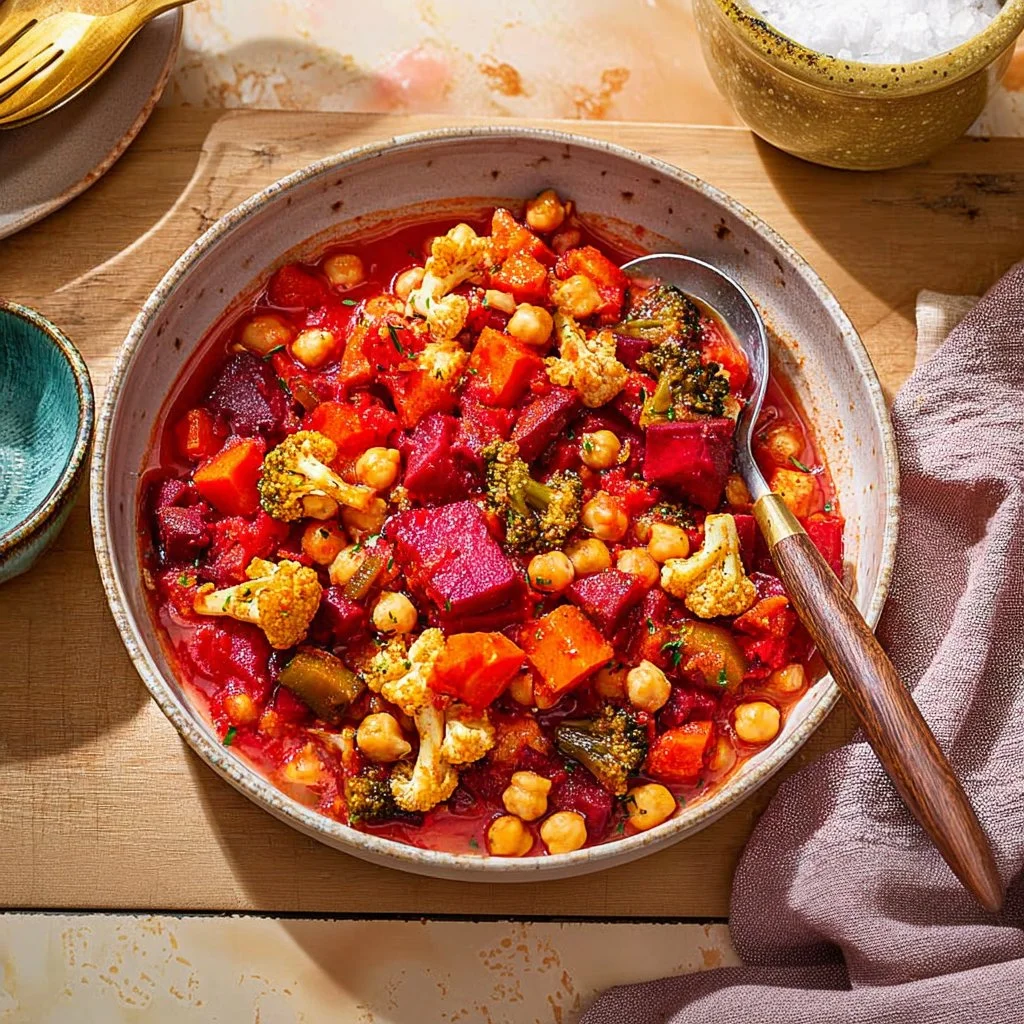
Turkish Vegetable Casserole with Chickpeas
Ingredients
Method
- Preheat the oven to 425°F.
- In a large, rimmed baking sheet, toss beets, cauliflower, carrots, red onions, and bell peppers with olive oil, oregano, Aleppo pepper, and about 1/2 teaspoon each of salt and pepper until evenly coated.
- Spread vegetables into a single layer and bake for about 30 to 35 minutes, turning halfway through, until charred and softened.
- Transfer roasted veggies to a large, deep baking dish. Stir in garlic, tomatoes, and chickpeas, seasoning with cumin, salt, and pepper.
- Use the empty tomato can to mix hot water with tomato paste, pour into the baking dish, and gently combine.
- Bake for another 20 to 25 minutes until fully cooked through, edges browned, and sauce thickened.