
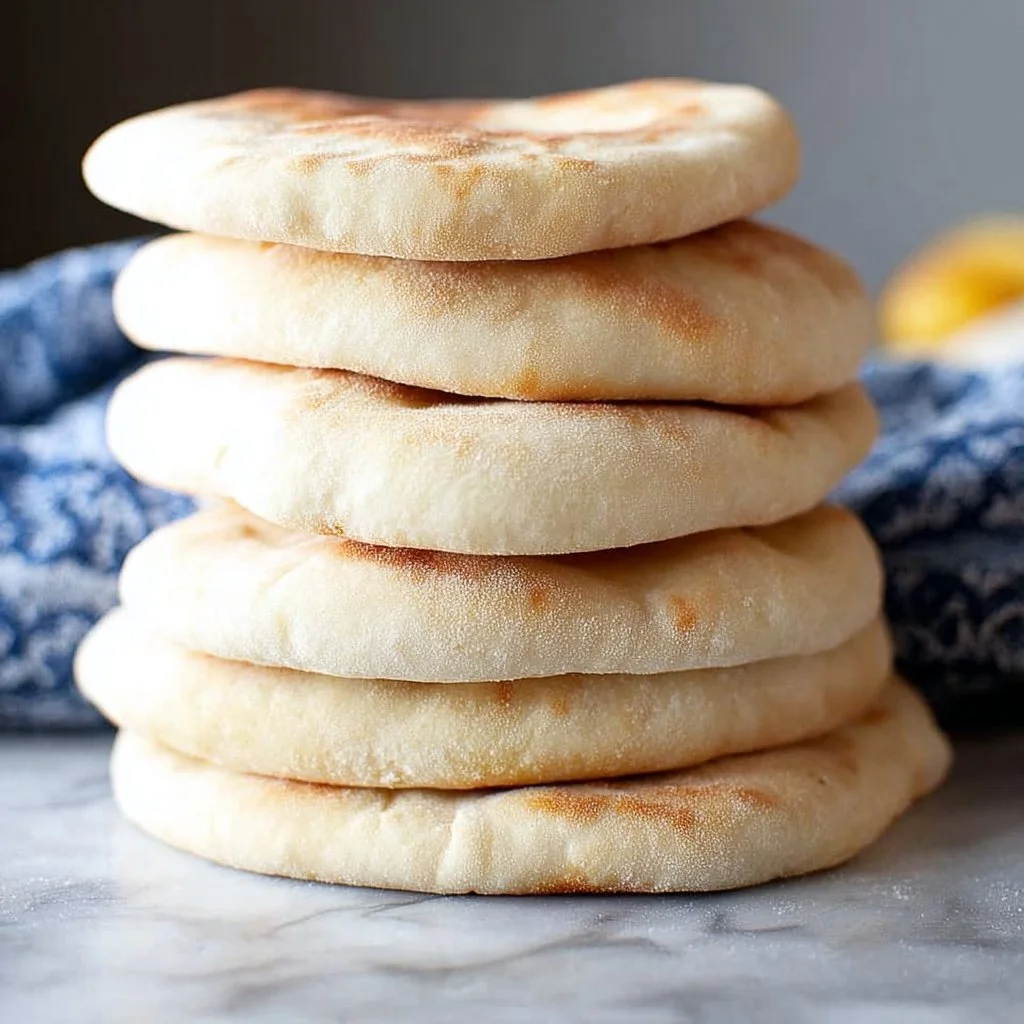
The Magic of Homemade Pita Bread: A Culinary Journey
Have you ever craved fresh pita bread that puffs up like a little balloon, only to be disappointed by store-bought options? You’re not alone! It’s a common frustration. Picture the first time you split open warm, pillowy pita, savoring its fluffy texture. That moment can change your perception of homemade bread forever. Welcome to our recipe for Homemade Pita Bread, where we’ll take you on an adventure in baking that will elevate your meals and warm your heart.
The Quest for the Perfect Pita
Many of us share a similar kitchen frustration: attempting to replicate that fresh-baked experience we find in Mediterranean restaurants. I remember the first time I tried to make pita bread at home. I followed a recipe to the letter, yet ended up with flat, sad discs of dough instead of the glorious pitas I envisioned. Disappointment loomed in my kitchen, overshadowing my dreams of creating a magic culinary moment.
As I reflected on my failure, I discovered that the secret to a perfect pita isn’t complicated. It lies in the technique, temperature, and, importantly, practice. My journey led me to perfect this Homemade Pita Bread recipe, which now graces my family table weekly. The way they puff up in the oven, the laughter shared over our meal, and the joy of creating something from scratch transform a simple meal into a celebration.
This moment took me back to my childhood, standing beside my grandma as she kneaded dough, her laughter mixing with the yeast’s effervescent rising. Her warm stories still linger in every loaf I make.
If you ever find yourself struggling to roll out dough or achieve the perfect puff, remember that great baking takes time and love. Embrace the process and enjoy the ride of homemade goodness. If you’re interested in another comforting baking adventure, check out our guide to Baked Chicken Recipes, a harmonizing dish to serve alongside your freshly made pitas.
Why Homemade Pita Works Wonders
Why does homemade pita bread work so well? The answer lies in the deeply satisfying blend of science and love behind baking. When you make pita bread at home, you harness the power of fresh ingredients, personalized techniques, and—most importantly—your own passion for cooking. You know exactly what goes into your bread, instilling it with care that store-bought varieties often lack.
Besides, the joy of watching your bread puff up in the oven is an unparalleled delight. It’s a moment of triumph, a physical representation of your hard work manifesting into something delicious. The taste and texture are simply superior; homemade pitas carry that essential warmth not only from the oven but from the love you put into them.
Quick Answer: The secret to perfect Homemade Pita Bread is allowing your dough enough time to rise and bake at a high temperature to produce that delightful puffiness.
Incorporating fresh yeast and letting it properly activate transforms the dough during the rising process, making it light and fluffy. Plus, using high-protein flour helps achieve a superior texture. Pairing this bread with flavors from dishes such as Chili Con Carne enhances your culinary experience.
By embracing the art of bread-making, not only do you create a tasty vehicle for various fillings, but you also develop a deeper relationship with your food. Every bite of your Homemade Pita Bread is a slice of heartwarming history, a small piece of nostalgia served at your table.
Ingredients, Substitutions & Foolproof Steps
Let’s gather our supplies for this simple yet rewarding journey to make Homemade Pita Bread. Here’s a brief list:
- Warm Water — Activates yeast; use milk for richer flavor.
- Dry Yeast — Critical for puff; fresh yeast can also work if available.
- Sugar — Nurtures yeast; you can use honey or maple syrup for a natural alternative.
- All-Purpose Flour — Gives structure; whole wheat yields a denser pita.
- Salt — Enhances flavor; essential for balance—don’t skip it!
- Olive Oil — Adds tenderness; substitute with vegetable oil if necessary.
- Greek Yogurt — Provides additional moisture; sour cream can be substituted.
Directions / Steps:
- In a medium bowl, combine the water, yeast, and 1 teaspoon of sugar. Let the mixture sit until foamy, about 5 minutes.
- In a large bowl, combine flour, salt, and remaining sugar. Add the yeast mixture, oil, and yogurt; mix to combine.
- Knead the dough until soft and slightly sticky, about 7 to 10 minutes.
- Transfer to an oiled bowl, cover, and let it rise until doubled, about 2 hours.
- Preheat the oven to 500°F and line baking sheets with parchment.
- Divide the dough into 12 balls, cover, and let rise for 20 minutes.
- Roll the balls into circles 1/4 to 1/2-inch thick.
- Bake until puffy and lightly browned, about 8 minutes, checking at 5 minutes.
- Transfer to a wire rack to cool.
Common Mistakes to Avoid
- Not allowing the dough to rise enough can lead to flat pitas.
- Baking at too low a temperature won’t create the perfect puff.
- Over-rolling can cause dense texture; aim for thickness of 1/4 to 1/2-inch.
Pro Tips
- Use a pizza stone to achieve high oven heat for that perfect rise.
- Mist the oven with water when baking to create steam.
- Enjoy fresh pita straight from the oven for the best taste!
Nutrition Highlights
| Nutrient | Per Serving | |———–|————-| | Protein | 7g | | Carbs | 12g | | Fat | 6g |
If you’re looking for a lovely side dish to pair with your warm pitas, check out our Chili Cornbread Casserole for a comforting combination.
Serving, Storage & Freezer Tips
How to Serve Homemade Pita Bread
Enjoy your homemade pita bread while it’s warm from the oven! They work wonderfully as a base for sandwiches, a side to dips like hummus, or simply for scooping up your favorite curries or stews.
How to Store Homemade Pita Bread
If you have leftovers (though I doubt it!), store them in an airtight container. They should remain fresh at room temperature for a couple of days or you can refrigerate them for up to a week.
Can You Freeze Homemade Pita Bread?
Yes, you can freeze pitas! Simply place them in a resealable plastic bag, separating them with parchment paper. They will store well for up to three months. Thaw at room temperature and reheat on the oven or skillet for the best texture.
Reflecting on my adventures with pita bread brings me joy. Each puffed pocket speaks of warmth and connection, a magical thread woven through my family’s meals. Homemade pita allows for delightful gatherings filled with love and sharing—a reason to celebrate every meal!
Frequently Asked Questions
Can I use whole wheat flour in this recipe?
Absolutely! Whole wheat flour can add a nice nutty flavor and texture to your pitas. However, the overall puffiness may slightly decrease.
Is there a gluten-free alternative for this pita bread?
Yes, you can experiment with gluten-free flour blends. Many people have found success using a cup-for-cup gluten-free flour that contains xanthan gum.
How do I know when my pita bread is done baking?
Look for a golden-brown color and a puffed-up appearance. They should have a light, airy texture.
Can these pitas be reheated?
Yes! Reheat them in the oven or on a hot skillet briefly to bring back their softness and warmth.
Conclusion
As we wrap up this delightful journey into the world of Homemade Pita Bread, remember that every puff of this bread carries part of your story and love for cooking. Like every recipe that holds cherished memories, this one is meant to be shared. If this recipe reminds you of someone you love, share it with them. Your memories keep recipes alive.
You May Also Like:
- Peanut Butter Chicken Recipe – The Ultimate Comfort Food Dish
- Alice Springs Chicken – Complete Guide
- Egg Roll in a Bowl
With each recipe we create, we stand united in the kitchen, connecting with our past, present, and future. Happy baking, my friends!
Homemade Pita Bread
Ingredients
Method
- In a medium bowl, combine the warm water, yeast, and 1 teaspoon of sugar. Let the mixture sit until foamy, about 5 minutes.
- In a large bowl, combine flour, salt, and remaining sugar. Add the yeast mixture, olive oil, and yogurt; mix to combine.
- Knead the dough until soft and slightly sticky, about 7 to 10 minutes.
- Transfer the dough to an oiled bowl, cover, and let it rise until doubled, about 2 hours.
- Preheat the oven to 500°F (260°C) and line baking sheets with parchment paper.
- Divide the dough into 12 balls, cover, and let rise for 20 minutes.
- Roll the balls into circles 1/4 to 1/2-inch thick.
- Bake until puffy and lightly browned, about 8 minutes, checking at 5 minutes.
- Transfer to a wire rack to cool.